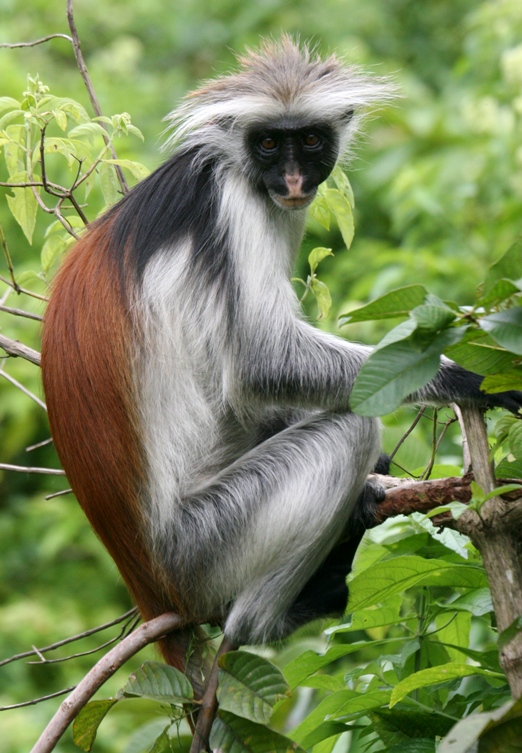
Zoo Live Feed Impressions – San Diego Zoo and Zoo Atlanta

The San Diego Zoo houses both orangutans (P. pygmaeus and P. abelii) and Siamangs (Symphalangus syndactylus). Through their Ape Cam live feed, we can see that exhibit is circular with a grassy center area and many tree stumps, rocks, and ropes from which to swing. Upon checking back with the live feed, the camera angle changed to a different aerial view of the enclosure, revealing the rocks more extensively. However, no orangutans or siamangs were shown. Also, I witnessed the camera pan around the large enclosure which revealed the extensive network of ropes and balls on the ropes with which the primates can play.

The next day, however, the camera revealed a view of a hammock hanging from what appeared to be a tree or some pipes. Hidden underneath some burlap in this hammock was an orangutan. The camera then switched to the ground level of the enclosure, showing the rocks and horizontal tree stumps. It also revealed one phlanged male sitting on the grass in front of the rocks, holding a burlap sack. This male proceeded to roll around the grassy area and lay down with the burlap sack on top of it. The background of this view shows a rock cave that is probably used to shelter the apes from the sun as well as give them some privacy in the enclosure from the gaze of people. Another orangutan walked into the view of the camera, picked up a burlap sack, and entered the rock cave, which then hid it from my view.

Screenshot of the Ape Cam

Screenshot of the Ape Cam

San Diego Zoo Ape Cam Live Feed

Based on these observations, the enclosure seems to have ample space for the orangutans. There also appears to be a wide variety of landscapes and terrains in the enclosure, including grassy ares, rocks, fallen trees, upright trees, a system of ropes for climbing and swinging, and the rock cave shelter. In fact, one of the hills provided an incline for one of the orangutans to roll down! However, the camera did not reveal the siamangs in this enclosure. The San Diego Zoo website reveals that there are only two siamangs present at the zoo, and including them the exhibit does seem to be ample in size. In the wild, though, the siamangs inhabit the same forests in Indonesia and Malaysia as the orangutans, so housing them together is not something strange, as they probably encounter each other in the wild.

As far as enrichment for the enclosure, there are many ropes to swing from as well as places for climbing. The rope and swing system is very extensive and quite large. The zoo website also states that in the enclosure there are two simulated termite mounds that hold snacks for the orangutans, which alternate between mustard, honey, and barbeque sauce. These termite mounds offer some enrichment, because the orangutans need to think about how to retrieve the snacks inside. Also, the burlap sacks offer enrichment as well. Bamboo near the glass viewing area provided places for the orangutans to climb as well, as one orangutan did in the live feed.

I think that this live feed is one of the best out of the other zoo feeds I’ve visited. The camera switches positions to show the orangutans very often, and upon losing sight of the orangutanss, it pans around the enclosure until they are spotted again. The website makes it very clear about how to learn more about both the orangutans and siamangs, through links at the bottom of the video. These links take you to a page with information on orangutans, as well as fun facts, facts about the orangutans, as well as facts about conservation and how the San Diego Zoo is helping to raise awareness for the dangers that orangutans face.

Screenshot from Golden Lion Tamarin Cam

Screenshot of the Golden Lion Tamarin Cam

Zoo Atlanta Golden Lion Tamarin Live Feed

The Zoo Atlanta has Golden Lion Tamarins (Leontopithecus rosalia). At night, the nest cam showed the tamarins hunched over and sleeping all together in a small enclosed box. This probably is to keep the tamarins feeling safe at night. During the day, however, the camera is focused on their indoor daytime exhibit. It shows a view of several tree branches and windows, and the lion tamarins jump along these branches. There are two windows shown with sunlight streaming through them, and for a lot of the time, the lion tamarins sit on the window sills in the sun. At one point, there were four in one window, with each tamarin grooming the other. This windowsill seemed to be the area of social interactions for the group, with some jumping onto branches but always jumping back to the window sill. There appears to be no glass in the windows, though, and the tamarins appear to be disappearing through it and reappearing at the other window. So, perhaps this leads to an outside exhibit as well. My impression of the exhibit is that it is a good size for a family of about five lion tamarins, with plenty of space to move around and jump.

It seems to be that there is not much enrichment in the environment, besides the ability to play on the fairly extensive branch network in the exhibit, and also one swing made from two ropes and a bucket that is seen in the lower corner of the exhibit. The tamarins do use the swing, and jump on it for short periods, but always retreat back to the branches and window sill. There might be more that is hidden from the camera, though, since I see the tamarins disappear beyond and behind the camera’s view quite often, and there appears to be more space behind the camera as well as above and below, that is not captured. Overall, the tamarins are very active in their exhibit, and move around quite a bit.

The website provides links to learning more about the golden lion tamarin, as well as links to the golden lion tamarin conservation program in Brazil that the Zoo Atlanta partners with. It provides information on the release of tamarins from Zoo Atlanta to Brazil in the 1990’s, and how they strive to reintroduce more tamarins to the wild through their reproduction program. The website also provides clear links for donation to the conservation project.

Fossey Archives: Conservation

This week’s blog post deals, again, with the Harold T.P. Hayes Papers located in the Special Collections area of the ZSR Library. These archives hold information about Dian Fossey, and include primary sources about her life, research, and correspondence. The topic of this week’s venture into the Fossey archives is that of conservation. I found within the December 1978 folder within Box 14, a series of letters written by Dian Fossey, one of which was to a Professor Rhine. In these letters, Dian requests for funds and contributions to the “AWLF Digit Fund” and asks Professor Rhine to please urge others to make out checks to the fund.

 
This fund is named after Digit, one of the young gorillas that Fossey was studying who was killed by poachers. Fossey created this fund to receive donations for supporting anti-poaching in the Parc des Volcans area. Through this fund, Fossey hoped to manage the funds to help create a project with the government of Rwanda to garner an expert for two years to help the Rwandans recruit, equip, and train park rangers. Fossey notes, however, that there was no time to organize the Digit Foundation so that it was capable of becoming a real fund raising campaign with administration and management. Therefore, Fossey transferred the organization task of running the Digit Fund to the African Wildlife Leadership Foundation. Through the AWLF, this hiring of an expert and management of funds to help train park rangers would be taken care of. The point of this, Fossey notes, is to avoid the need for Fossey herself and the Karisoke Research Center staff to deal with the problem of poaching, which was a very politically sensitive issue.

Above: Rangers and locals transport a gorilla that was killed by poaching

In another letter addressed to Mrs. Mary Pechanec, the executive director of the L.S.B. Leakey Foundation, Fossey thanks Pechanec for her donation of $500, as well as mentions poaching yet again. Fossey also writes that on the anniversary of Digit’s slaying, and because the worst time for poacher activities is during the holiday season, she sent a patrol to the area where the poachers used trap lines the year before, and found some lines set up which her patrol cut down.

 
These two letters, as well as the record from the October-November 1978 folder entitled “Fourth Report on Killings of Macho and Uncle Bert” on which I wrote an earlier blog post, all show that Dian Fossey dealt a great deal with the problem of poaching as an issue to primate conservation. According to these sources, Fossey used own staff and herself as the forces against poaching. However, with the creation of the Digit Fund, it shows that Fossey recognized that having just her small team to fight against poaching was not enough. Her letters show the attempted transition to get larger support and a larger force, in this case, the African Wildlife Leadership Foundation, behind the anti-poaching conservation movement. In fact, her letters from the archives show the transition of garnering larger organization’s assistance in order to help conservation movements on a greater scale than just one person. This type of conservation is what we see today, with organizations appealing for donations in the same way that Fossey appealed for her donations in letter form.

 
We have seen examples of Fossey taking the anti-poaching movement into her own hands, as described in the book Gorillas in the Mist, where she kidnaps the son of one of the poachers and uses him as negotiation to stop poaching in that area. This is definitely a drastic move that we can use as an idea of what not to do, and today these types of extreme actions are not performed. Today, instead of making enemies with the local population, the conservation movement seeks to work with them and promote friendly relations, as well as educate the locals on the subject of primates. Fossey seeks to do this some with her desire to educate more park rangers, however she could have done more to be in good rapport with the rest of the population around the park. We can strive to make these good relations today and educate the population so that they care about the gorillas and feel attachment to them as the magnificent creatures they are. Once this appreciation is created, the local peoples can assist in the conservation of the animals, even when the research is over.

Fossey, D. “Digit Fund Letter to Professor Rhine.” Dian Fossey Collection: Box 14. Howard T.P. Hayes Special Collections. Wake Forest University, Winston-Salem, NC. Accessed April 21, 2014. Print.

Fossey, D. “Letter to Mary Pechanec” Dian Fossey Collection: Box 14. Howard T.P. Hayes Special Collections. Wake Forest University, Winston-Salem, NC. Accessed April 21, 2014. Print.

Fossey, D. “Fourth Report on Killings of Macho and Uncle Bert” Dian Fossey Collection: Box 14. Howard T.P. Hayes Special Collections. Wake Forest University, Winston-Salem, NC. Accessed Febuary 25, 2014. Print.

Fossey, D. 1983. Gorillas in the Mist. New York: Houghton Mifflin Company

Polyspecific Associations

In forests, there are sometimes a great number of primates that live in one area, so interactions often occur. One result of these interactions is the formation of certain relationships between primates, one being a polyspecific association. Polyspecific associations are relationships that form between two different species of primate. One polyspecific association that has been studied is the one between red colobus monkeys (Procolobus badius) and Diana monkeys (Cercopithecus Diana) both located in the Tai National Park, in the Ivory Coast.

Above: Red Colobus Monkey

Above: Diana Monkey

These two very distinct looking species spend about 62% of their time together, and this polyspecific association leads to changes in behavior in both species. The larger red colobus monkeys change their grouping patterns through spreading out more in a similar fashion to the Diana monkeys. Even though they do not overlap greatly in diet, the smaller Diana monkeys still change their diet when together by including more insect prey. In this way, the two species reduce competition between each other by changing their normal behaviors to ones more favorable for cohabitation.

The main benefit of this polyspecific association is that of shielding from and avoiding predators. The Tai National Forest contains more predators and because of this it shows more polyspecific associations between the two primates than in other forests with less predators. By forming relationships, the two species are able to have more individuals that can detect predators and less chance of capture by a predator.

The way that these two species use each other to avoid predators is through their presence in different areas of the trees. The red colobus monkeys travel higher in the canopy than the Diana monkeys, and so they are thought to be a shield against the aerial predators of the Diana monkeys. Also, the Diana monkeys serve to act as lookouts for other terrestrial and arboreal predators that seek the red colobus monkeys.

Another predator of the red colobus monkey is the chimpanzee, whose predation accounts for a large part of their mortality (up to 1/3). During the rainy season, chimpanzees carry out their hunting, and during this time the polyspecific associations between the two species as well as their initiative to join up together are most common. This suggests that the two assemble to protect themselves against the chimpanzee predators.

Above: Campbell’s Monkey

Evidence of this has been carried out through experiments where tape recordings of chimp vocalizations are played to red colobus monkeys during the day. Upon hearing these recordings, separate red colobus and Diana monkey groups join together. Also, upon hearing these recordings when already together, the two species stay in association longer than when no recording had been played. Also notable is the polyspecific association between the Diana monkey and the Campbell’s monkeys (Cercopithecus campbelli), where both species have alarm calls for crowned eagles and leopards, their mutual predators. By converging, the two are able to listen to each other’s distinct calls for the corresponding predator and escape accordingly.

Ultimately, polyspecific associations are important in the wild because they provide ways for primates to work together to fend off greater threats, like predators, or to help each other in gathering food with two occupying the same area and benefiting each other by feeding on slightly different things. As the saying goes, two heads are better than one, and the same applies to primates. Two primate groups looking out for the collective good are definitely better than one, and the polyspecific associations definitely show this.

Strier, Karen B. Primate Behavioral Ecology. Boston: Allyn and Bacon, 2000. Print.

Primate Cognition: Assessments and Experiments

This week my post will be discussing the study of primate cognition. Based on our reading in Primate Behavioral Ecology, there are three types of approaches to studying primate cognition. The first deals with examining the mechanisms that help primates to develop cognitive abilities using computers and experiments with objects and tasks. The second approach examines spatial memory and tool use, dealing with ecological selection pressures that involve finding food resources which affects reproduction. The third approach deals with the social advantages of allies and assessing individual primate capabilities to understand its own social position relative to others.

Examining imitation is important several of these approaches, because it shows the ability for a primate to understand cause and effect even when it doesn’t happen to them. Because it shows this higher level thinking, studying how different primates handle imitation is often done through seeing how they use tools. Individuals learn through watching other primates operate tools, and this learning is different between different primates. Also notable is the bias in tool use depending on what method was shown to the primate. For example, in common marmosets, the test marmosets used the same technique that their demonstrator used. Another difference among primates is that apes can often understand more than monkeys. For example, apes realize where a hand hides something if they see the hand do it.

Spatial memory is important in examining cognition because it shows how primates can remember the location of essential food resources which ultimately saves time and energy. Spatial memory has been examined though experiments with chimps, where one chimp was shown where the food was hidden in an enclosure and that chimp then led the others to that location using the shortest routes. Similarly, tamarins in the wild were given bananas on platforms that were moved in an alternating fashion so that the platforms would have real bananas and artificial ones at different times. The tamarins figured out this system and acted accordingly throughout the day.

Tool use is important in cognition because it shows a level of thinking between that of other animals and humans. Tool-sets are used among some primates, where two different objects are used together to do one task. One example of the study of tool use is in the article by Lindshield and Rodrigues (2009), where spider monkey tool use involving detached sticks, was observed.

Social intelligence is an important aspect of cognition because a good social memory involving deception and distraction shows a comparable importance to spatial memory, since relationships are remembered. Remembering alliances and hierarchies is a part of this as well, and is studied. Deception is an equally important form of social intelligence because the theory of mind is essential to perform it (meaning one can imagine the mental thoughts of others, not based on their physical behavior).

Out of these four types of cognition, examining imitation, spatial memory, and tool use are probably the easiest in which to form experiments. Any cognition experiment involving what primates actually think, or secretly think, can be more difficult to perform and analyze due to us never really being able to fully get inside the mind of the individual.

In the video above, a chimpanzee named Ai touches a screen to match colors with their symbol (in Japanese kanji). Ai also knows the number sequence of 1-19 and when the numbers are randomly arranged on the screen, he is able to tap the numbers on the screen in order. But this is not all. The next step is that he must do it again, but the second time he does the task and hits number 1, the other numbers are masked with blocks. Despite this, Ai is able to touch the exact sequence of numbers from his working memory.

Even more difficult, Ai is able to hit the correct numerical sequence from seeing the numbers for less than one second then having them masked on screen. This is an amazing feat, and is one that I know I could not complete. Although he does make mistakes, he still is able to hit the correct sequence even after losing concentration.

I think this study is valuable because it shows just how impressive a chimp’s memory is. This game seems similar to some iPhone games and apps that I’ve seen, which are dedicated to sharpening your brain and its functions. However, Ai can do these tasks much faster than I can, and much faster than any other human I’ve seen. This just goes to show that, in the wild, chimps must have great knowledge and memory of where food is located, and probably have a vast memory of these resources. Studies like this are important because they help to assess cognition and assess how chimps are able to survive in the wild and probably very quickly recall locations.


Lindshield SM, Rodrigues MA. (2009). Tool use in wild spider monkeys (Ateles geoffroyi). Primates. 50: 269-272.

Strier, Karen B. Primate Behavioral Ecology. Boston: Allyn and Bacon, 2000. Print.

Second Article Review

This article is titled “Management of the Rhesus Monkey (Macaca mulatta) and the Hanuman Langur, or Gray langur (Presbytis entellus) in Himachal Pradesh, India”. Both of these monkeys are distributed across this area of India in forested areas, but only the Rhesus macaque has been able to survive in urban environments. The article seeks to analyze the population trends among these two different primates in various districts in India. It also takes into account the primate’s food habits as well as the feelings of the locals towards the primates which are growing strained with the loss of conservation ethics.

Above: Rhesus macaque

Above: Hanuman langur

The monkeys of India inhabit many different environments, some being forests, roadsides, villages, towns, cities, and temples. Hindus protect these monkeys as they symbolize one of their gods resembling a monkey, Hanuman. Issues take place when the monkeys are viewed as pests to crops and agriculture, and trapping occurs. Upon release, the animals are not always placed with people that are familiar with urban monkeys and their behaviors. Also, the encroachment of humans into the forest environment threaten biodiversity of the area as well as these monkeys. As a result, developing a management program for the Rhesus macaque and Hanuman langur is essential to their conservation. Another reason for planning a program is the differences in behavior between the Rhesus macaque and Hanuman langur.

Above: The Hindu god, Hanuman

The article describes the study area and methods, and states great variation in the region including mountains, valleys, and hills, including the Himalayas. These variations contribute to a diverse climate that is wet subtropical, cool humid temperate, cold moist temperate, and cold dry temperate. The human population of this area is noted to have increased from 77 persons/km^2 to 92 persons/km^2. Using this information as a basis, the monkey population was assessed by survey parties that searched for the primates on foot at sites divided into forest and non-forest. Interviews of local individuals were taken as well in order to record important observations and determine the locations of the primates. Group discussions on conservation issues were held with the locals as well.

The study showed that 90% of the 152 groups of Rhesus macaques and 64 groups of Hanuman langurs were located in the hills and 10% in the mountains, while none were found in the agricultural areas. Overall, it was found that the population of the Rhesus macaques had increased since 1965 from about 70,000 to about 155,080 in 1989. This can be due to differences in methods and survey methods but also the ban of exporting monkeys that was put into place in 1978. There was no estimate available for the Hanuman langurs.

Although the population of the monkeys has increased, the fate of these primates is not certain due to the habitat destruction through timber extraction and commercial agriculture. Also, the fact that the Rhesus macaques are so adaptable to urban environments can harm the relationships with the humans, and make them seem unfavorable.

The behavioral differences between the two primates shed light on why the Rhesus macaque are so adaptable. A one-year study shows that Rhesus macaques participate in significantly more feeding through human resources than langurs, while langurs engage in significantly greater feeding in the wild. Also, both primates raid crops, but only the Rhesus steal or snatch food. Therefore, the Rhesus monkeys would be less favorable in the perspective of humans due to their feeding strategies in the city. Also, there was no significant difference in the Rhesus population in different parts of the forest, while langurs appear to have a preference.

Concerning the people’s perception of the two primates, 90% of people view the Rhesus as the incarnation of Hanuman, a Hindu deity, while 10% view the langur as this incarnation. Related to this is the presence of the primates at temples, where there are no langur groups located near the temples versus 17 groups of Rhesus. However, 83% of people think that Rhesus macaques harm their crops, while only 44% state that langurs do crop damage, showing that langurs are seem as more gentle.

Above: Rhesus macaque at a hilltop temple

Noting the peoples’ perception of the two are essential in determining how to conserve these primates. Most people stated that they would like compensation for crop damage and also for the primates to be removed from the villages and towns. However, if removed, these monkeys would be replaced with new ones. Therefore, one option for the villagers is compensation for the crops although it would be tedious to calculate and payment delays could occur, and the other option is for the animals to be removed each year through traps and sold to research labs. One more proposed option is that villagers can plant wild fruit trees in the forests and field edges for the monkeys to feed on instead of the crops. Overall, the article notes that the policy of the future should take into account the feelings and attitudes of the locals in the plans for management. Also, conservation should start within the protected areas.

The strong points of this article in my opinion is the concern for the ideas and thoughts of the local people. It is essential that these be taken into account when dealing with conservation, because without the support of the community, it will be hard for plans to succeed. One weak point of the article is the lack of information on the Hanuman langurs. Although it is difficult to conduct a population study on primates that prefer living within the forest, accurate and conclusive data is needed to make good comparisons between the langurs and Rhesus. Perhaps in a future study, there can be more extensive surveys of the two, and more analysis on the interactions between the Rhesus macaques and humans within the cities. Despite these critiques, this paper will definitely be useful in my final paper on the topic of primates in cities, specifically the Rhesus macaque.

Pirta RS, Gadgil M, and Kharshikar AV. (1995). Management of the Rhesus Monkey (Macaca mulatta) and the Hanuman Langur (Presbytis entellus) in Himachal Pradesh, India. Biological Conservation. 79:97-106.

Proposed Paper Topics

For my upcoming final paper, I will be doing a literature review on the topic of primates in urban environments. As shown from my blog header image, before I even knew what I do now about primates, I have always thought primates in the cities as an interesting juxtaposition. When thinking of primates, the first landscape that comes to mind is not that of a city populated by humans, but instead of a lush jungle or African savannah. But today, there are primates that can thrive in cities and make a successful life there.

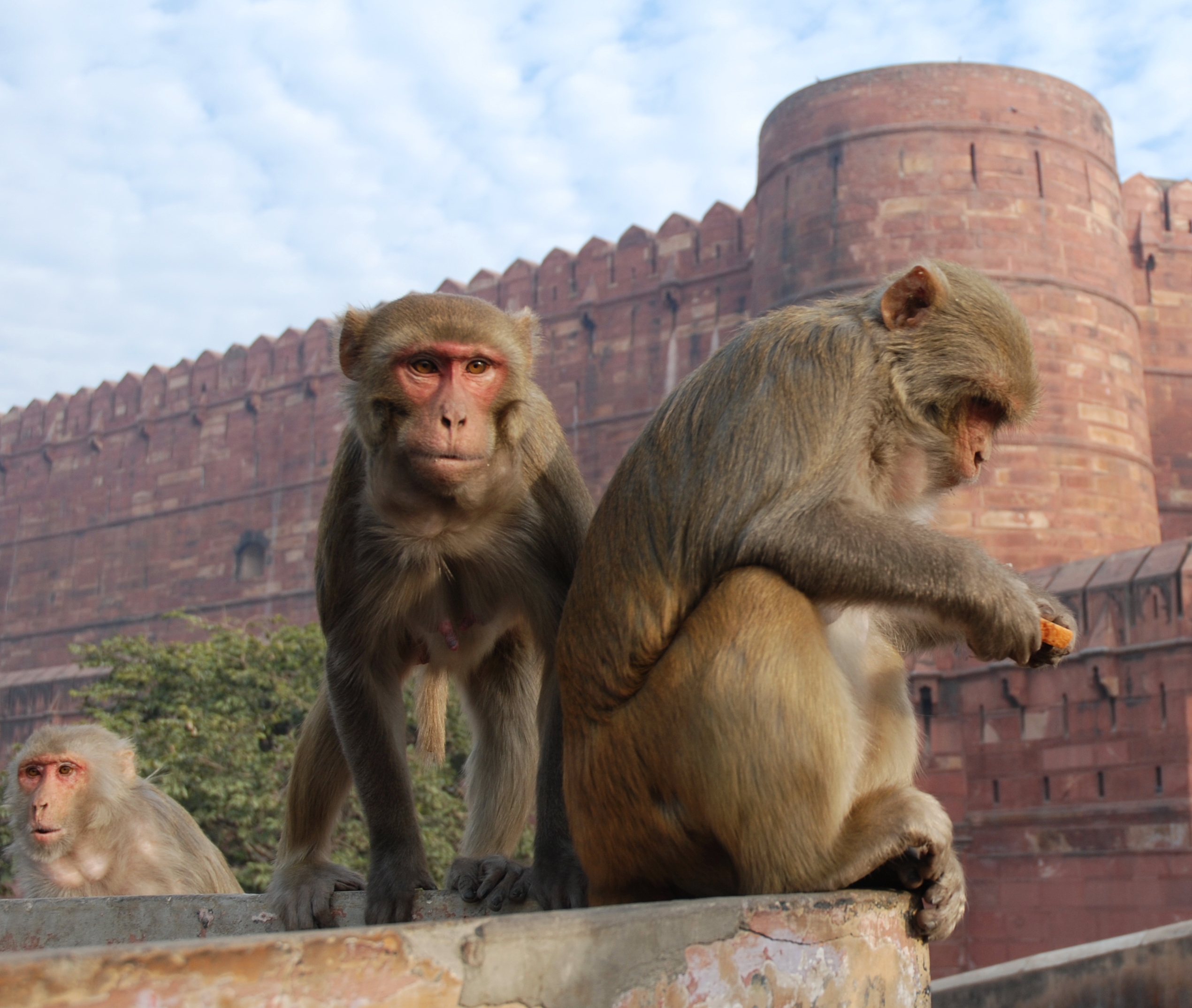
Above: Rhesus Macaques on a rooftop in India

One of these primates is the Rhesus macaque (Macaca mulatta) of Northern India. These monkeys have made homes near temples and New Delhi itself, and have extensive contact and interactions with humans. Studying their behavior versus the behavior of macaques in the wild can show how these different habitats shape their actions, and how human contact can cause change as well. I think with the ever-increasing threat of habitat destruction, the issue of where primates are forced to live is a topic that will be of growing prevalence. We have already read about this of habitat destruction some in our textbooks, but I think reading literature and articles about it will give me a deeper understanding about the research going on today and more in depth analysis about what is going on. Perhaps this research will even show how living in close proximity with primates can affect both human and primate health, and other unforeseen issues as well. Dr. Rodrigues mentioned that the transmission of herpes was an issue among temple monkeys and humans, which can be something to investigate as well.

Above: Rhesus macaque in a courtyard accompanied by pigeons

One article I have found deals with a population survey of Rhesus monkeys in Northern India near roads and forested areas (Southwick et al. 1961). This will provide me with data on the monkeys in environments that are between the wild and urban areas. A related article is that of population surveys in villages, towns, and temples in India, which combined with the previous article will create a fuller picture of the Rhesus living habits (Southwick et al. 1961). Another article deals with the ecology and feeding behavior of Rhesus macaques in both forest and urban ecozones in India (Seth and Seth 1985). This article will hopefully direct me to what these population behaviors were like at the time of the study. Some background on the typical behavior of the Rhesus macaque can be found in an article which shows how they do not perform reconciliation in contrast to other species of macaque (de Waal and Johanowics 1993). Finally, I have found an article that details the population changes among Rhesus monkeys over 20 years in India (Soutwick et al. 1983). With these sources under my belt, I think I have a solid start to my literature review.


De Waal FBM and Johanowicz DL. (1993). Modification of Reconciliation Behavior Through Social Experience: An Experiment with Two Macaque Species. Child Development. 64(3): 897-908.
Seth PK, Seth S. (1985). Ecology and Feeding Behavior of the Free Ranging Rhesus Monkeys in India. Indian Anthropologist. 15(1): 51-62.

Southwick CH, Beg MA, and Siddiqi MR. (1961). A Population Survey of Rhesus Monkeys in Northern India: II. Transportation Routes and Forest Areas. Ecology. 42(4): 698-710.

Southwick CH, Beg MA, and Siddiqi MR. (1961). A Population Survey of Rhesus Monkeys in Villages, Towns and Temples of Northern India. Ecology. 42(3): 538-547.

Southwick CH, Siddiqi MF, and Oppenheimer JR. (1983). Twenty-Year Changes in Rhesus Monkey Populations in Agricultural Areas of Northern India. Ecology. 64(3): 434-439.

NC Zoo Impressions

Two weeks ago, our class was able to take a field trip to the North Carolina Zoo, in Asheboro. My first impression of the zoo was that it was very large, with our class having to walk from the North America area to the Africa area. This was not a quick or easy feat, and several wrong directions were taken. The size and expanse of the zoo can be seen below on the zoo map.

We made it to the Africa area, but unfortunately it was too cold for the gorillas to be outside in their enclosure, so we passed the time by looking at other primates and other exhibits. One exhibit that was especially entertaining were the hamadryas baboons. Their indoor enclosure was accessible to the public through the Africa pavilion, so we were able to observe them in relative warmth and see how they spent their indoor time. Knowing a little bit about hamadryas behavior from previous classes, we were able to see how they all interacted and showed behavioral patterns that involved having one central male with several females making up his group. There were several males, and we saw how they groomed and interacted with the females, as well as how the infants played together. Watching the baboons interact was intriguing and hilarious all at once, and was something I greatly enjoyed about the visit. Another primate we saw while waiting for the weather to warm up were the chimps. The chimps were much mellower than the baboons, and we were able to examine them in their outdoor enclosure. The baby chimps were out as well, and we were able to see some brief interactions among them.

Hamadryas Baboon at NC Zoo

Hamadryas Baboon at NC Zoo

Photo taken of Chimps at NC Zoo

Chimps at NC Zoo

Finally, in the early afternoon it was warm enough for the gorillas to be outside, and we were able to begin our observations. The gorillas were at first very active, and we saw a lot of play between the two infants and the mothers. This play was interspersed with a lot of naps and rest, which is something that surprised me. Having read and learned some about gorillas in class, I knew that their behavior was that of a lot of eating followed by significant amounts of rest so that digestion can occur, but I did not really realize how much of their time would be spent asleep until the zoo visit. These long periods of rest made some of my observations rather boring, but it was still great to actually witness how they behaved, even when they were unmoving in slumber.

Gorilla resting on burlap. Photo taken at NC Zoo.

Gorilla resting on burlap. Photo taken at NC Zoo.

One of the things that also surprised me was how human the gorillas seemed. There were burlap clothes around the exhibit for them to play with and interact with, and often the juveniles would play with these. Also, one of the mothers used them as a sort of blanket for sleeping, after pulling two together and smoothing them out in a very human-like fashion; similar to what any person would do when using a picnic blanket, for example.

Seeing the gorillas in person also showed me how important playtime is for the juveniles. Besides sleeping and eating, all the two juveniles did was play with each other and with their mothers, showing that it was an essential part of their day as well as their development into adults. Viewing the juveniles with their mothers also revealed how heartbreaking it was for Acacia, who had recently lost her child. Oftentimes she would be by herself resting, and go to the opposite sides of the enclosure from the rest of the gorillas.

One thing I wish we could’ve seen is the interaction between the female adults and a silverback male. Unfortunately, the silverback had recently passed away, and there was no replacement male present. I think seeing the male-female dynamic would have been very interesting and could have changed the course of my observations. Also, being in captivity also probably had an effect on their actions, since they have limited space to move and do not have to forage for food, since it was provided by the zookeepers who threw veggies into the enclosure. In the wild, the gorillas probably are in motion a lot more, and travel distances. This behavior could not be seen in the restricted space of the exhibit.

Overall, I thought the visit to the NC Zoo was fun and very informative. We were able to see the behaviors of a few different types of primates, and were able to visibly see the behaviors that we have only read about before. Although the gorillas were not the most active of the primates, it was still enjoyable watching them. The hamadryas were undoubtedly more entertaining, observing them and recording what we saw probably would have been more difficult, as they switched behaviors quickly. Because of this, I’m glad that the gorillas are what we had to observe. This visit has definitely left me with the desire to see other primates as well, as well as a more complete appreciation of what primatologists have to go through in their field work.

(Note: All primate photos taken by me.)

Fossey Archives: Behavior

Above: Dian Fossey with a mountain gorilla (Gorilla beringei beringei)

This week’s e-portfolio is especially interesting because it deals with primary sources on Dian Fossey’s research. We were able to go to our special collections section of the ZSR Library and look through the Harold T.P. Hayes Papers, which were his own collection of notes, letters, and manuscripts for his biography on Fossey’s life. Within these boxes of manuscripts, I was able to find a folder that contained letters and notes from October to November of 1978. One field report I found was titled “Fourth Report on Killings of Macho and Uncle Bert”, where Fossey records the actions of a few groups of gorillas after the killings of two of them by poachers.

This report is separated by days, with observations and records under each day. It begins with an entry from September 20, 1978 where Fossey describes how gorilla Group 4 was contacted. Fossey recorded the length of time of the contact, which was 8.83 hours, as well as the elevation of the environment, which was 10,400’ to 10,500’. Fossey names the gorillas, and some of these names include Titus, Tiger, Kweli, Simba, and Beetsme. Grooming was recorded between the gorillas, and the time grooming each was noted, as well as the different bouts of grooming. For example, Fossey states that “Time of the youngsters split between Tiger and Beetsme; the latter groomed Titus a total of 30 minutes in 10 bouts and groomed Kweli 21 minutes in 3 bouts.” Play was also recorded in minutes and bouts. Interactions, such as infants climbing onto adults, was recorded, as well as embraces, whining, and feeding.

Throughout this six page record, this process of recording the location, hours contacted, times of play, times of grooming, vocalization, and other interactions were continued. Fossey uses the term “pig-grunt” often. When describing the actions of the gorillas that do not involve recording time and bouts, Fossey is descriptive with her words. On September 27, 1978, Fossey writes the following: “Tiger increases the distance and struts; Ninkie struts again to him to 3m and gives a hoot series. An interaction of this nature could indicate that Nunkie is not interested in taking Simba at this time. Prior to interaction Tiger and Kweli pig-grunt at Beetsme moving near them. Neglected to mention that during interaction Neetsme, Tiger and Titus all strut in presence of Nunkie’s group.” These descriptions of walking are easily understood and clearly recorded, which is something Fossey does throughout the report.

The state of the group is also something Fossey records, like whether they are relaxed or nervous. On September 28, 1978, Fossey describes Group 4 as being “more compact then usual and quite relaxed” while on September 30, 1978, Fossey describes Group 4 as “quite nervous during the contact”. Events like copulation is recorded also, for example on October 5th, 1978, with Fossey describing mounting and thrusts in terms of minutes as well as copulatory pants.

Fossey also makes notes on changes in behavior. On October 6th, 1978, a long entry is made on the reduction of interest in grooming between two juveniles. Fossey records the difference sin grooming minutes and bouts, and states her puzzlement over the reduction. Poacher attacks are a concern within this report, and Fossey mentions her concern that this reduction will mean that the gorilla Beetsme will not defend the juveniles if another peacher attack occurs. The entry goes on to describe the capture of a poacher and the interactions between the patrol and the poacher, and his subsequent sentence to imprisonment.

At the end of the report, Fossey provides a useful summary of events through September 20 and October 14th, and divides the summary into a list of interactions and lists of individuals and their activities. Here, Fossey adds together the minutes of grooming and playtime to make overall minute totals, as well as calculates the average of minutes per bout. Fossey also summarizes the interactions each gorilla has with each other, and establishes the frequency of interactions between each, and if some only interact with certain gorillas. This section is useful in that it analyzes all the previous records, and synthesizes the information in a fashion that is less confusing than the daily notes. Finally, Fossey includes political aspects in the summary, which detail the progress made with findng poachers that were hiding. Obviously poaching is a great concern for Fossey as she mentions it throughout her reports.

Compared to Fossey’s report on gorilla behavior, Robbins’ chapter entitled “Gorillas Across Time and Space” in our book Primate Ethnologies is more than just field observations. Fossey’s report was very straightforward in its recordings of gorilla behavior, with precise minute recordings and behavioral notes. Detailed recordings seem to be a paramount concern for Fossey. Robbins’, in contrast, writes more as if she is telling a story and involves more aspects than cut-and-dry recordings. In summary, Robbins’ chapter details her return to the gorillas she studied more than a decade earlier. She notes that Fossey’s work should be lauded, but that times have changed and the single-handed field work and observations cannot be all that people do for research in the present day. Robbins makes the argument that now, more can be done with gorillas in terms of conservation and teamwork with local populations. Robbins’ shows that the field of primatology has gone forward and progressed from the primatology of Dian Fossey’s era.

(One incredible detail to note in Robbins’ chapter is that Bwenge, the gorilla she met years ago, is the son of Titus, a gorilla mentioned in Fossey’s report.)

 Above: Titus

Above: Bwenge

Sources:

Fossey, D. “Fourth Report on Killings of Macho and Uncle Bert.” Dian Fossey Collection: Box 14. Howard T.P. Hayes Special Collections. Wake Forest University, Winston-Salem, NC. Accessed Febuary 25, 2014. Print.

M, Robbins M. “Gorillas Across Time and Space.” Primate Ethnographies. Chapter 15. By Karen B. Strier. Upper Saddle River, NJ: Prentice Hall, 2013. 163-74. Print.

Food and Social Organization

Social organization is something that is formed based on many factors. One of the most important factors is food. This is because of the way certain food related factors affect female feeding strategies. These factors include: food quality, spatial food distribution, and seasonal food availability.

Food quality is important because eating high-quality and low-quality foods provide very different amounts of nutrition. Energy and nutrient content is an important part of food quality as well, as is digestibility and edibility. Digesting food requires energy, and morphology is affected by diet and digestion needs. Body size is also affected by diet, in that smaller primates are usually frugivore-insectivores and larger primates are usually frugivore-folivores. This is related to metabolic rate, in which smaller primates have a high rate which requires food that can be more easily digested than foliage.

The spatial distribution of food is also important, because there is a tradeoff between the energy a food provides and the energy it takes to get to the food’s location. This affects social organization because primates should evolve in ways that maximize this trade off. Also, the need to defend food patches affects social organization as different primates need to distribute themselves in a way that promotes foraging efficiency and differences in ranging patterns. Related to this, primates that are more frugivorous generally have a larger home range than primates that are folivores.

Finally, the seasonal availability of food resources is important because primates often change what types of food they eat based on the season, as the rainy season is more fertile than the dry season. This lack of high-quality food in a season can affect reproduction as well, and cause it to be restricted to times of high-quality foods where the mothers are able to provide nutrition for their offspring.

Food, in general, is especially important for females because of the metabolic costs of gestation and lactation. Females must eat enough for two individuals at the end of pregnancy, as they are supporting the metabolic needs of themselves as well as their fetus. Lactation is also a food concern because body fat is needed in order for milk to be produced. In fact, lactation requires two to five times more energy than in non-lactating periods. Therefore, females that are lactating must eat more as well as eat foods higher in energy content. Female primates bear the burden of offspring care in most cases, and this includes the energy it takes to carry the infant from place to place.

Also, food is important for the general reproductive success of females. There is a maximum number of offspring able to be produced by female primates, based on how long the female is able to live, when the female begins their reproductive cycle, and the interval between infants. Females that are able to obtain more food and better food are able to start their reproductive cycles earlier as well as produce healthier offspring. They also have shorter intervals between births and live longer. Therefore, the success of a female in reproducing and reaching this maximum potential is largely based on food.

spider monkey

Above: Spider Monkey (Ateles paniscus chamek)

chimp

Above: Chimpanzee (Pan troglodytes)

The relationship between food and social organization can be seen clearly through the comparisons of spider monkeys (Ateles paniscus chamek) and chimpanzees (Pan troglodytes). These two primate species, although very different (spider monkeys being New World monkeys and Chimpanzees being Old World anthropoid), show similar fission-fusion social organization due to their similarities in diet. Both primates are highly frugivorous, and therefore need to increase their low-quality food intake, such as foliage, in seasons with low fruit. The seasonal fluctuations in the food patches as well as the spatial distribution of the food patches over wide areas promote competition between females of each group, which has actually led to the evolution of the fission-fusion social organization (Symington 1990), in which females are able to depart from the group and forage on their own with less competition.

Source: Strier’s Primate Behavioral Ecology; Symington, Fission-Fusion Social Organization in Ateles and Pan

Bonobo Sexuality

Parish and De Waal’s article entitled “The Other ‘Closest Living Relative’” details how Bonobo behavior challenges previous assumptions about sexual relations and female dominance. Bonobos are valuable to study because they are one of our closest living relatives, tied with the chimpanzee. Despite their close relatedness to each other, the two species have very different patterns of sexual behavior.

bonobos

Above are two bonobos engaged in sexual behavior.

Parish and De Waal mention that the closest bonds in bonobo groups are between unrelated females, and these bonds are responsible for the social cohesiveness of the species. The female bonds enable them to dominate males in terms of feeding and in terms of sexual behavior. One of the unique sexual behaviors of bonobos is genito-genital rubbing, in which females participate routinely, unlike chimpanzees. Also, female bonobos often engage in sexual activity in relation with feeding, which is unlike chimpanzees. Also, bonobos have all combinations of sexual partners, and bonobo females will spend 50% of their adult life showing large genital swellings.

bonobo genital swelling

Above is an image showing the genital swelling of a female bonobo.

These differences in behavior have several different hypotheses for their emergence. One idea is that having female dominance allows for high ranking female bonobos to have control over food which helps their reproductive success. This dominance also reduces male threats and any attempts for males to coerce sexual activity and it reduces the amount of infanticide. Other benefits is that female dominance could provide for an earlier onset of reproduction as well as shorter intervals between births. Bonobo and chimp differences could be due to environmental influence, but studies show that these differences persist in captivity as well, outside the realm of environmental variability.

Strier (in Primate Behavioral Ecology) mentions that in multi-male female groups, there is a dominance hierarchy among the males in which fighting and competition are prevalent in order to access estrous females. But among bonobos, males fighting is kept at bay with the female hierarchy, in which the females the aggressors who keep the males in line. Strier also mentions sexual swellings and how it is akin to “wearing your reproductive condition on your sleeve”. I think that the fact that bonobo females spend a much higher percent of their life showing these swellings makes them more reproductively autonomous, as it makes it more ambiguous to the males when they are actually ovulating and fertile.

I definitely think that bonobo sexual behavior is relevant to human sexual behavior and its studies, because the bonobo has the equal amount of genetic relatedness to humans as chimpanzees do. Therefore, it would almost be unscientific for primatologists to ignore the bonobo completely, as they are another one of our closest living relatives and provides us another pathway to examine the complex subject that is human sexual behavior. The differences in behavior between bonobos and chimps, and the fact that we are equally as related to them opens up many doors in how to examine humans. It shows us that no simple description can be used to describe how humans came to behave the way we do. Also, it is important to study bonobos since there has not been as much research about them and much can still be learned that could apply to humans. Chimpanzees have been favored because of their popularity as study subjects as well as that, as a species, their behaviors perpetuate the popular assumptions about where humans came from and our last common ancestor, which is an ancestry based on warfare, meat hunting, and male dominance, rather than sex, fruit sharing, and female dominance.

In order to be a self-reflexive primatologist, we must acknowledge that our ideas about human sexual behavior have bias, and that bonobos could offer another potential viewpoint on the subject. One example of this bias is that the article begins its section on dominance by stating all the ways in which scientists have downplayed the fact that bonobo females are indeed “dominant”. It describes how terms are used that imply that the males are dominant, but “allow” the females to have control, and that females are “troublesome” in their actions. This shows that it is important to note that although works are scientific, they express the biases of the time, which has throughout recent history, been that of male dominance.